02 / SELF-SERVICE / KNOWLEDGE / APPLIED AI
Ask A Local
Employee knowledge, designed to be used & measured
A searchable, customized employee knowledge system with clear ownership of the information & a measurable way to improve it.
THE QUESTION BEHIND THE BUILD
Can employees find an answer without first finding the person who knows it?
01 / THE CONTEXT
The answer shouldn't depend on knowing whom to ask.
Employees needed a dependable route to guidance on technology, policies, processes & day-to-day work. The information existed, but it wasn't consistently easy to find or manage.
I researched & negotiated the knowledge platform, then built the employee-facing experience: coded interface customization, templates, permissions, content, training & administration. This was a system I built on Helpjuice, not merely a tool I purchased.
02 / TWO SIDES OF THE EXPERIENCE
Build it for employees.
Measure what they need.
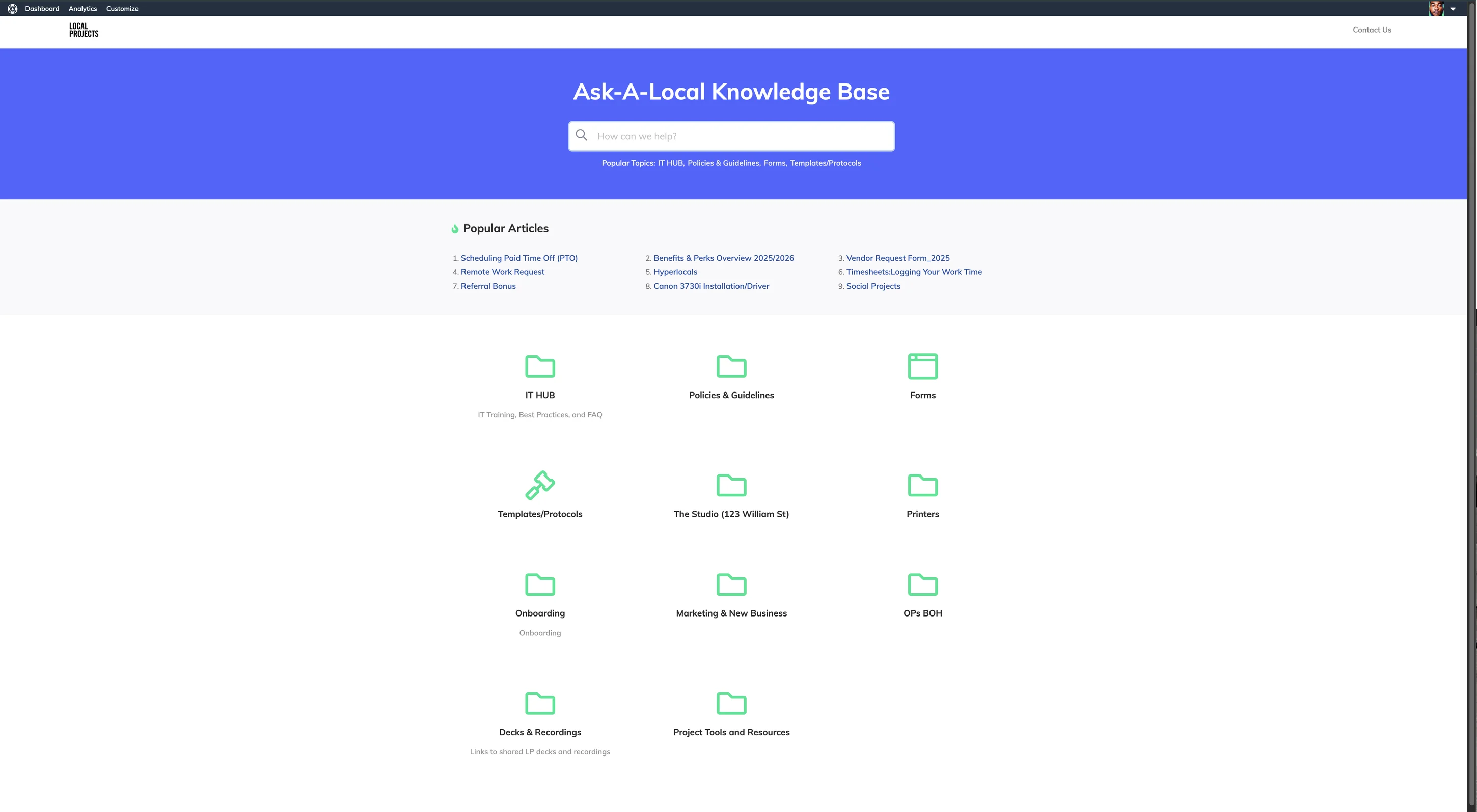
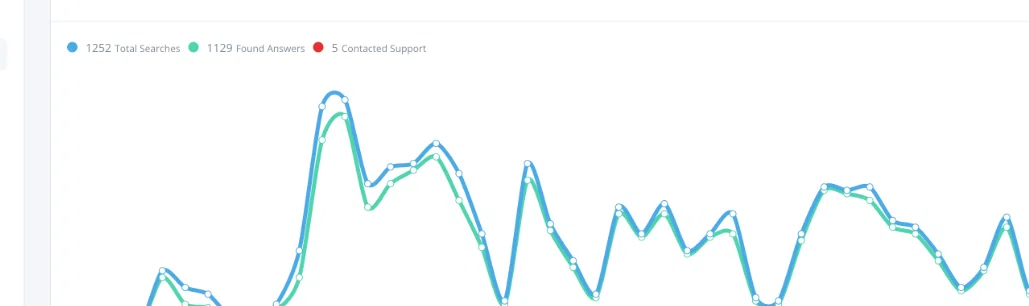
Choose between the employee view & aggregate search evidence.
 Click to inspect
Employees arrive looking for a specific answer, not a tour of the software behind it. The experience was organized around the tasks & questions that recur.
 Click to inspect
Search success is not the same as a resolved support issue. I use the activity to find missing answers, improve guidance & see where employees still struggle.
03 / WHAT I OWNED
Not simply a software purchase.
Select & configure
Researched alternatives, negotiated the vendor relationship & configured categories, templates, access & permissions.
Write what people need
Authored 112 of 120 guides & designed content around practical employee tasks, from onboarding to technology support.
Use the evidence
Review search patterns & support questions to decide what needs clearer guidance, updated documentation or a better process.
04 / MORE THAN KNOWLEDGE
AI belongs where it improves the work. I initiated formal AI adoption at Local Projects, including governance, tool evaluation, role-specific training & support for practical use cases.
APPLIED AI / GOVERNED ADOPTIONMeasurement note: ~90% describes the share of searches returning answers, not a measured support-case avoidance rate.