03 / CUSTOMER EXPERIENCE / OWNER OPERATIONS
Aaron's On It
One business. Two very different user experiences.
Customers should be able to explain a problem in plain English. The owner needs the records, workflows & judgment points to turn that request into actual work.
THE QUESTION BEHIND THE BUILD
Can the same product be simple for a customer & useful enough to run the business?
01 / THE CONTEXT
Make it easy to ask.
Make it possible to deliver.
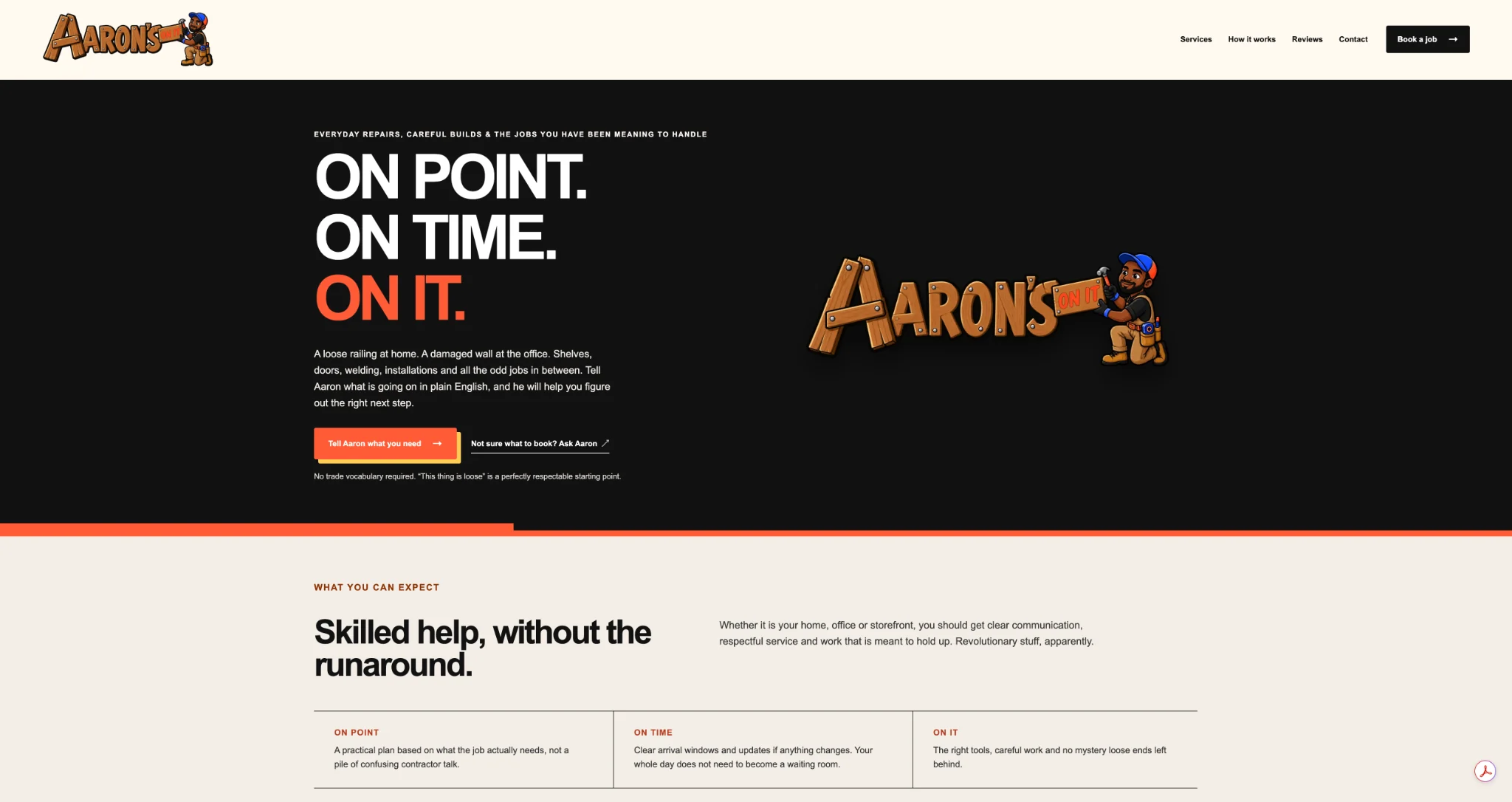
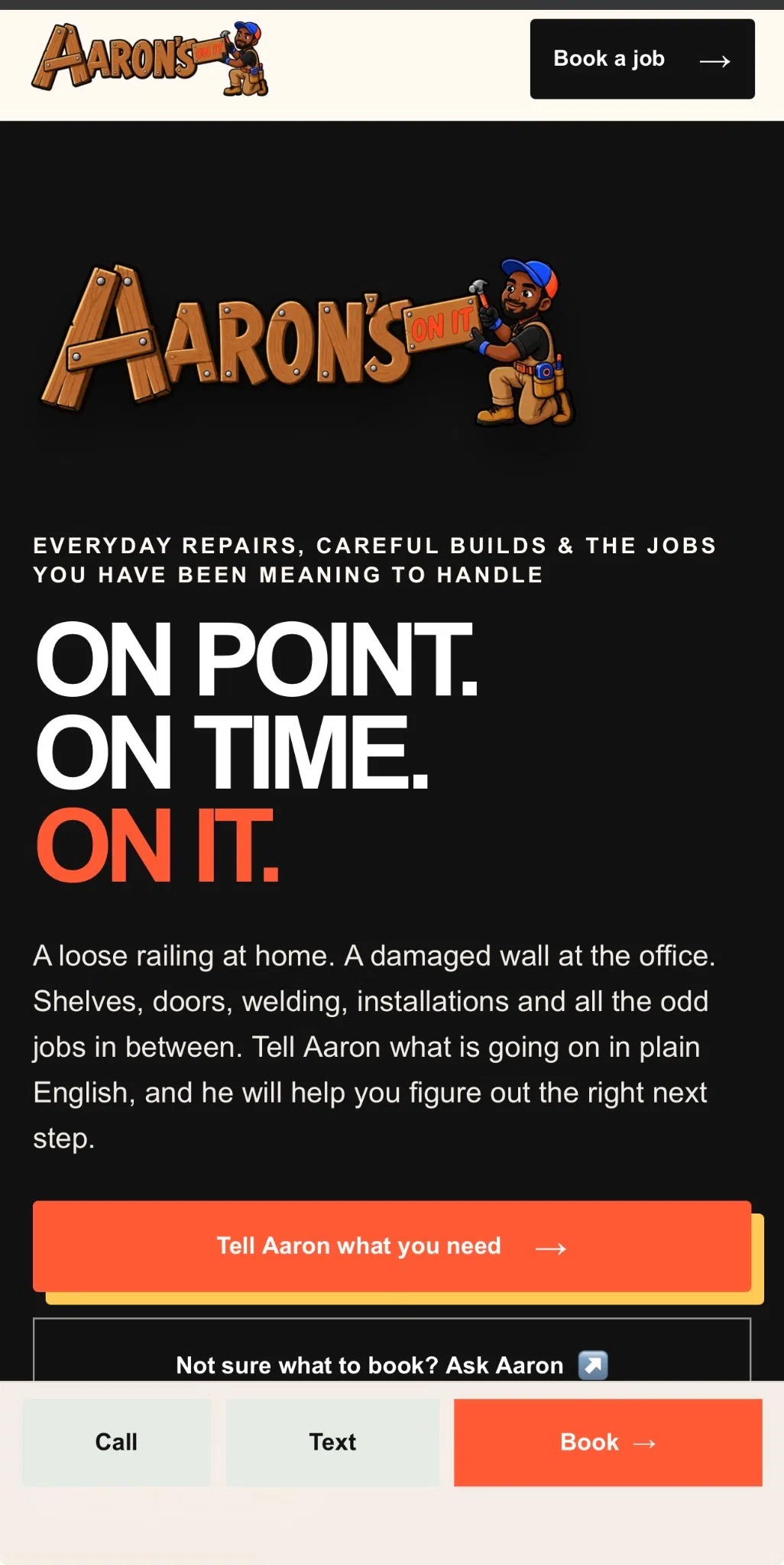
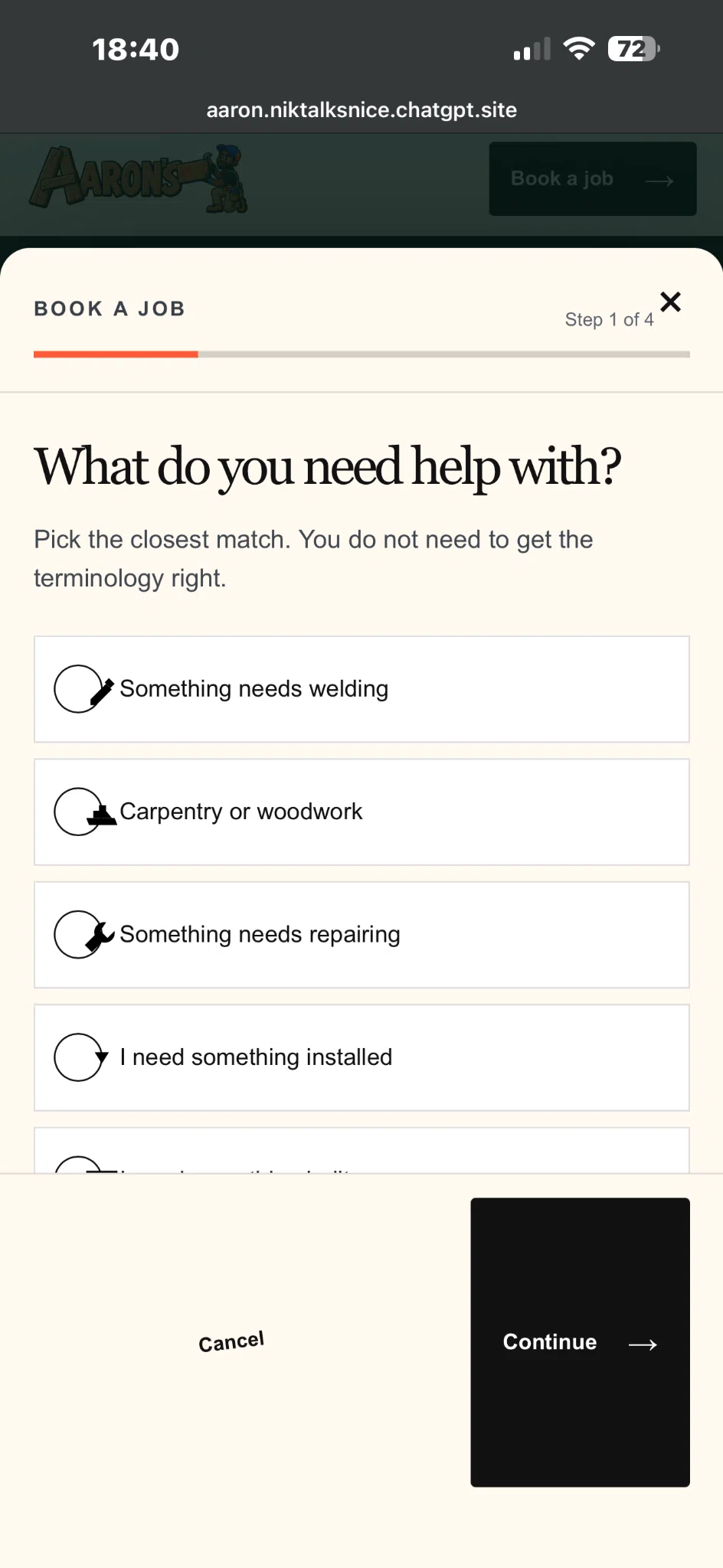
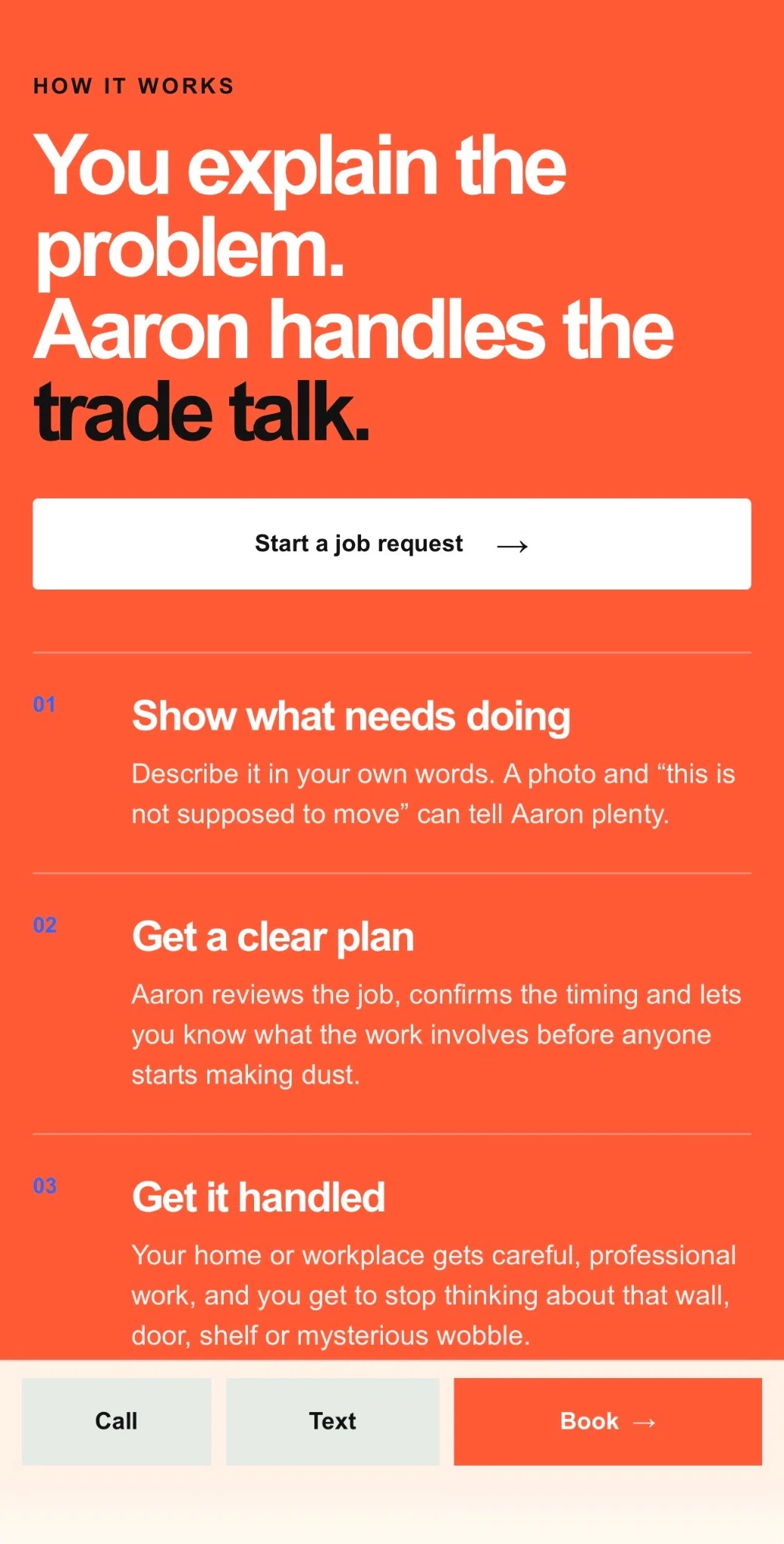
A customer shouldn't need to know the difference between trades to describe a loose railing or a repair that needs attention. The public site uses plain-language choices, expectations & a straightforward booking request.
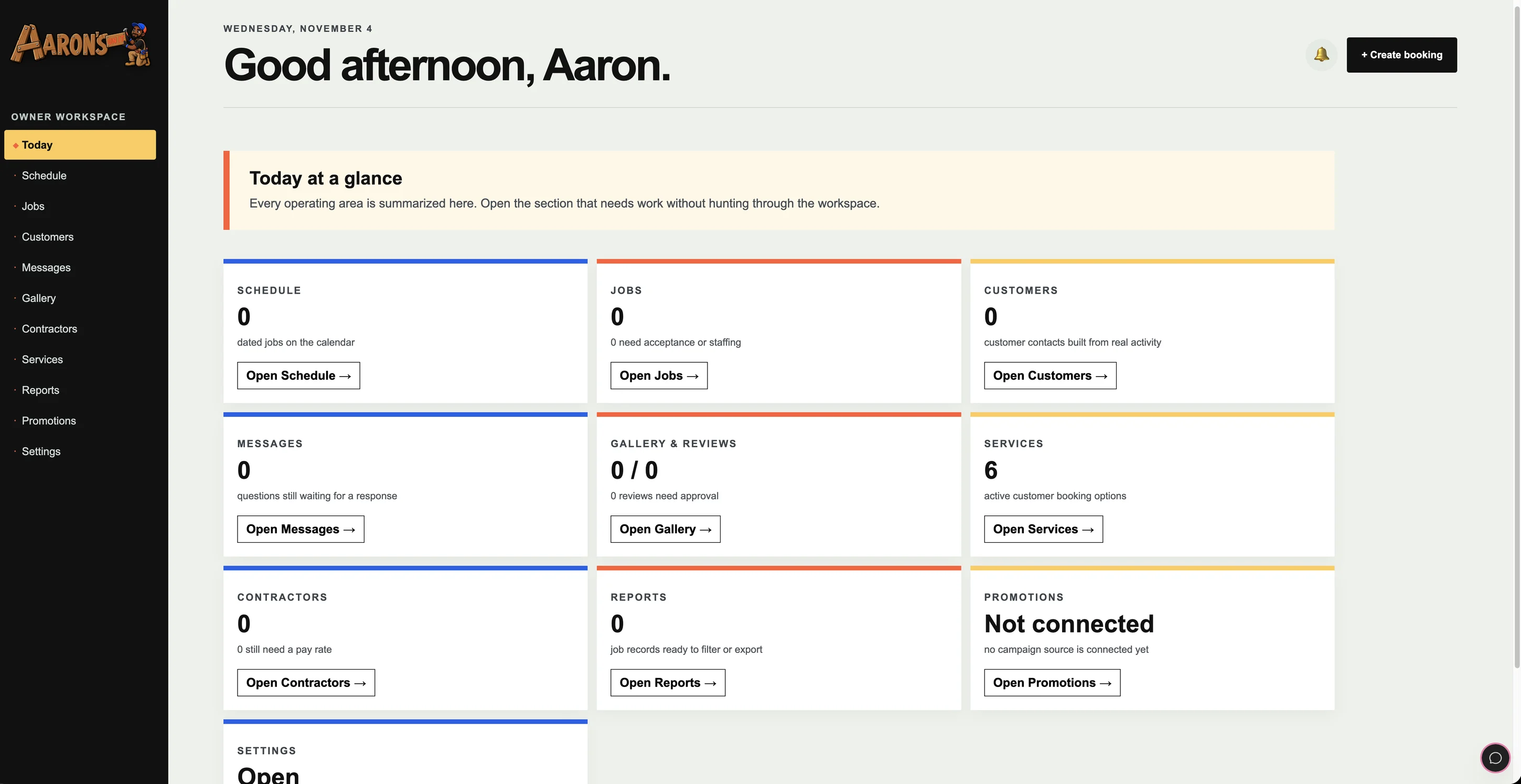
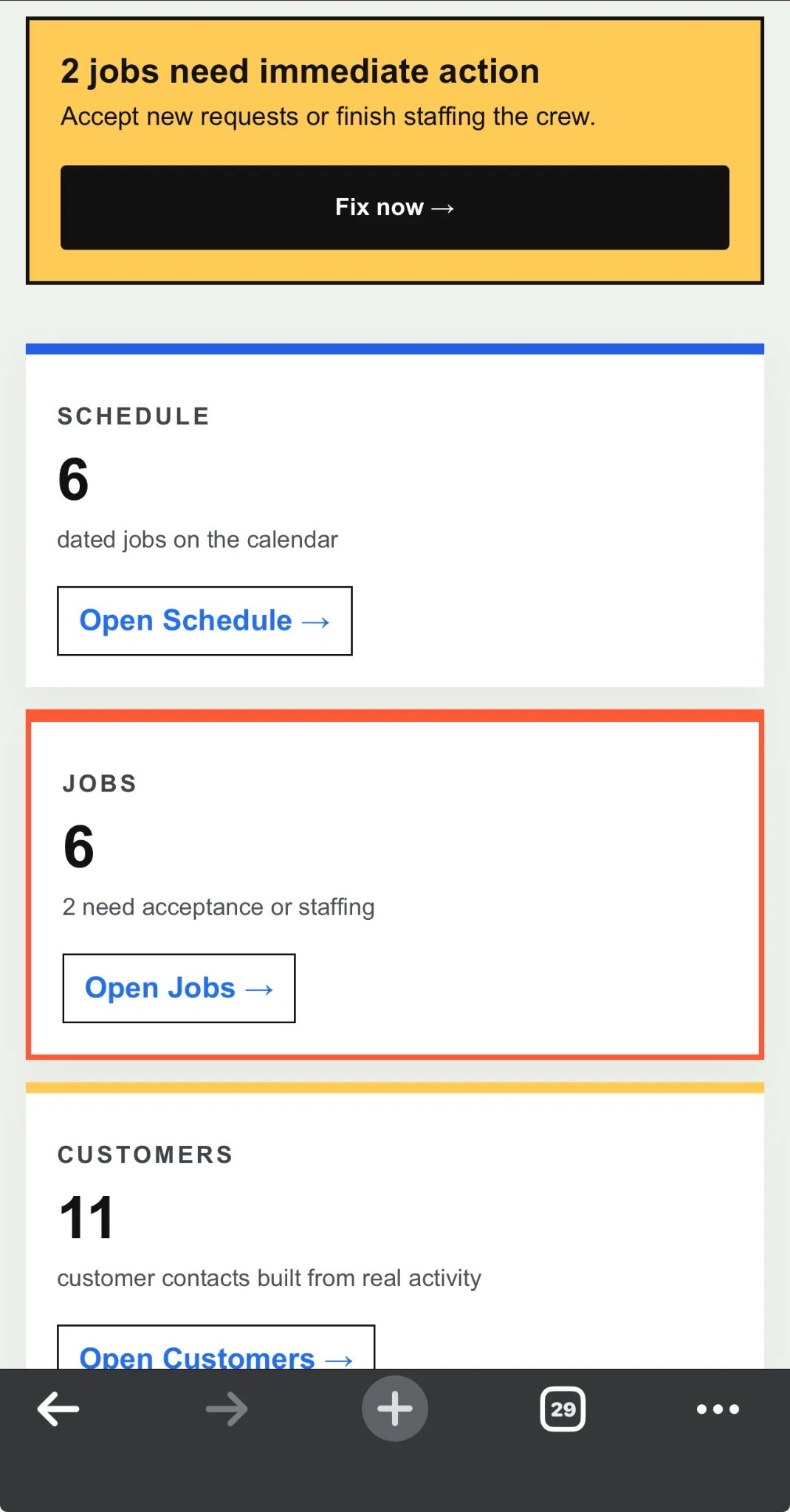
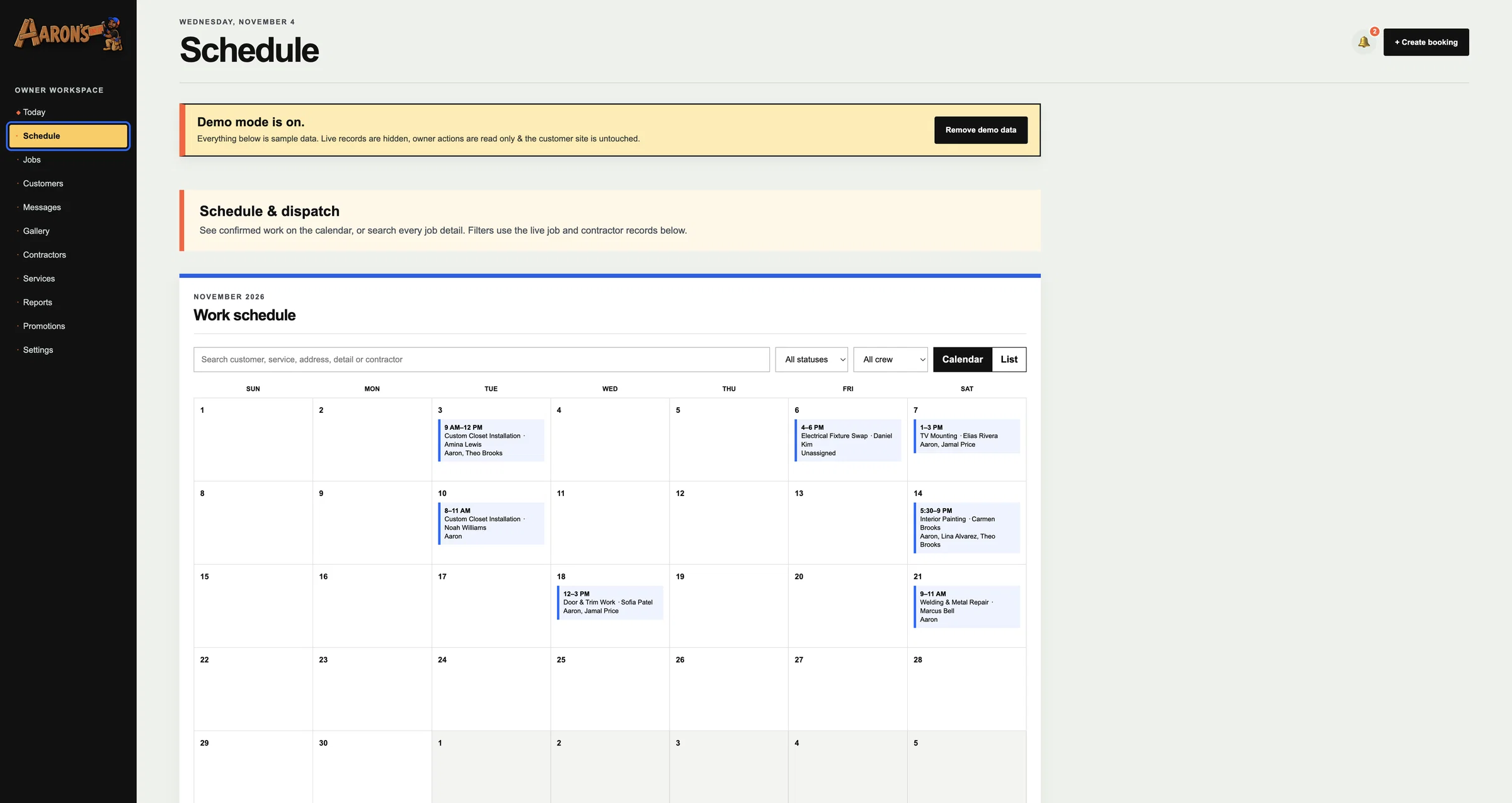
Behind that experience, the owner needs to review, accept, staff, schedule & manage the work. I designed the customer-facing & internal sides as connected parts of the same product.
02 / TWO USERS, ONE BUSINESS
The public front door.
The working back office.
Switch perspectives to see how the needs of each user shaped the design.
 Click to inspect
The starting point is the customer's problem, not a list of trade jargon.
 Click to inspect
The owner sees where a decision is needed, rather than hunting through disconnected menus.
A clear path on mobile
 Click to inspect
 Click to inspect
 Click to inspect
 Click to inspect
03 / FROM REQUEST TO DECISION
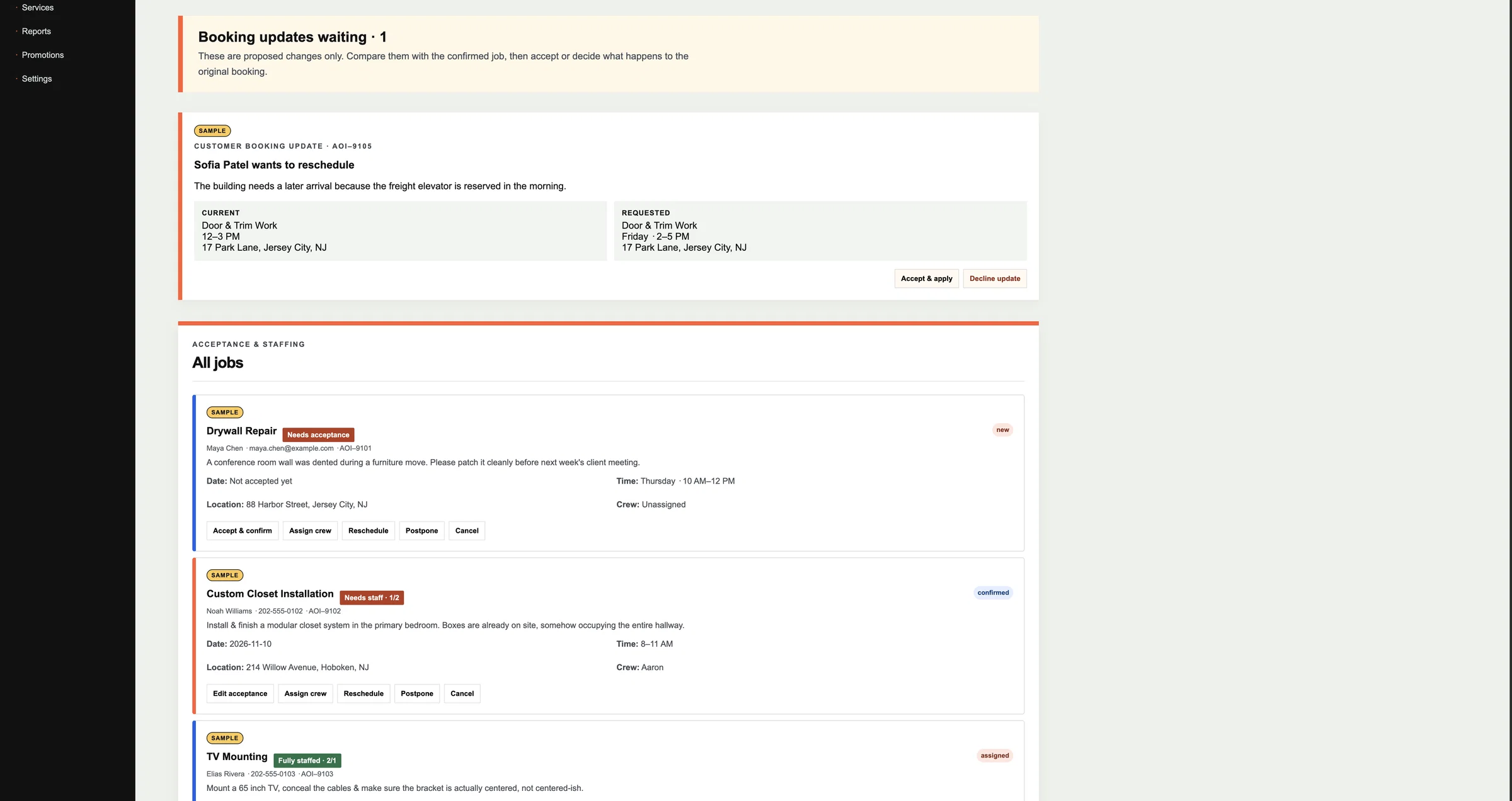
A saved record isn't always
a finished job.
 Click to inspect
 Click to inspect
Built to run without the builder.
I wrote the owner guide around actual daily work: accepting bookings, verifying scheduling, staffing, communications, reporting, troubleshooting & what still requires human judgment.
The guide separates saved from sent, a proposed booking from a confirmed job, & skill matching from actual calendar availability. Those distinctions matter when real people depend on the result.
04 / THE PRINCIPLE
Designing for handoff means making the right thing obvious, documenting the exceptions & letting the owner run the business without needing the builder in the room.
OWNER OPERATIONS / RESPONSIBLE HANDOFFThe workflow screenshots use labeled sample data. The operating guide documents both working functions & known limitations; it is not published here because it includes private access information.